
The group companies now lead the market capitalisation league table in sectors such as ports, power generation, gas distribution and transmission, and power transmission and distribution, ahead of incumbents in both public and private sector. This has Gautam Adani family the second wealthiest in business in India.

Overall, Tata Steel becomes the seventh non-financial firm, including four oil PSUs to report quarterly revenues of Rs 50,000 crore.

The government has been in discussions to promote such international financial services centres within India as alternatives to places like Singapore.

Discussions are said to have been heating up over how long a tax indemnity clause, which is part of such deals, should run, according to multiple people familiar with the matter.


Earnings growth in the early-bird sample has been driven by banks and iron & steel companies.

Stocks mutual funds had invested in had risen almost to pre-pandemic levels in March.

However, experts caution that investors should not expect the big returns they got from the sector between March and September 2020.

Together with its share buyback worth Rs 16,000 crore completed in January this year, TCS shareholders will receive a record Rs 30,250 crore from their company in FY21.

The earnings are, however, expected to be down around 2 per cent on a sequential basis due to pent-up demand getting exhausted and the adverse impact of rising metals and energy prices on consumer goods and manufacturing companies.

India Inc's cash pile was up 13.8 per cent last fiscal year, thanks to a combination of higher profits in sectors such as IT and fund raising by top companies such a Reliance Industries, Bharti Airtel and Tata Motors, among others.

This year is set to be the third consecutive year when India's share of IPOs has fallen relative to the rest of the world.

Lawyers say compensation may be an uphill task for investors because of a lack of judicial precedent and broader institutional difficulties.

Tata group companies have outperformed the broader market over the past four years, under the chairmanship of N Chandrasekaran. However, the group's fortunes rely heavily on the performance of Tata Consultancy Services (TCS) now, as compared to the past. The combined market capitalisation of the group's listed companies has nearly doubled in the last four years, against a 77 per cent rally in the benchmark Sensex during the period. The overall market value of 16 key group firms - excluding listed subsidiaries of such entities - stood at Rs 16.8 trillion as of Friday. This was close to 2x the Rs 8.45 trillion as of February 21, 2017 - the day Chandrasekaran took charge as chairman of Tata Sons.

India Inc's quarterly net profit reached a record high of Rs 1.64 trillion in the third quarter ended December 31, 2020, mainly due to gains from higher commodity prices and a big swing in banks' earnings. The combined net profit of 3,323 listed companies that have declared results so far was up 68.6 per cent year-on-year (YoY). In comparison, earnings were up six times (534 per cent) in the second quarter and 6.5 per cent in the corresponding period last year.

Companies providing portfolio management services (PMS) had a tough time beating the benchmark index in January, with more than half of the schemes invested in large companies underperforming in the run-up to the Union Budget. The Nifty 50 index was down 2.5 per cent during the month. Only around 44 per cent of PMS schemes did better, among the schemes investing in large-cap companies. The analysis is based on data from industry tracker PMS Bazaar. Half the mid-cap schemes outperformed, while the rest underperformed.
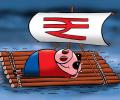
The Union Budget 2021-22 has made it easier for sovereign wealth funds and pension funds to invest in Indian infrastructure projects, but some of the new rules may need more clarity, experts said. The proposed regime requiring investments through holding companies may have adverse tax implications for such funds and may create an arbitrage between the new and old projects, they said. Besides, the ownership structure of holding companies through which investments are to be made requires further clarification, they added.

The combined net sales of 42 listed construction and capital goods companies that have declared their third-quarter results so far were down 2.3 per cent year-on-year in Q3FY21 while core operating profit was up just 4.9 per cent YoY during the quarter.

Market cap of government companies has remained unchanged in the past 8 years.

Acquisitions may have played a role in much of the increase.
